
Most SEO writers now start blog posts with an AI prompt instead of a blank page. The question is no longer whether to use AI, but which model and which prompts produce content that actually ranks. ChatGPT remains the default for many, but Claude, Gemini, and Jasper have all shipped updates in 2026 that change the math. According to McKinsey, AI adoption in marketing and content roles has doubled since 2023, and the tools have become impossible to ignore for anyone publishing at scale. This comparison digs into the real prompt workflows that work today, not the generic advice that was floating around two years ago.
We tested each tool with the same five SEO briefs: a product comparison post, a how-to guide, a listicle targeting low-competition keywords, a review post with multiple entities, and a local SEO landing page. We measured output quality, prompt adherence, research integration, and how much manual editing each draft required. We also tracked pricing and free-tier limits because small differences add up fast when you produce 10 to 20 posts per month. The goal is to show which tool earns its subscription for which type of SEO content.
ChatGPT is still the most flexible prompt engine. You can read our full ChatGPT review or compare it directly with Claude for blog writing and Jasper for SEO content. But the short version is this: ChatGPT gives you raw control, Claude gives you long-form coherence, Gemini gives you research scale, and Jasper gives you a guided SEO workflow. The right choice depends on how much prompt engineering you want to do yourself.
We also pulled user reviews from G2 to see how these tools perform outside of our test bench. The ratings generally line up with our experience: ChatGPT and Claude lead on output quality, Jasper leads on ease of use for SEO teams, and Gemini wins on raw research capacity. Below we break down each tool with specific pros, cons, pricing, and the exact prompts that worked best in our tests.
How Do the Top Options Compare?
| Tool | Best For | Starting Price | Context Window | SEO Prompt Strength |
|---|---|---|---|---|
| ChatGPT | All-around prompt flexibility | $20/mo (Plus) | 128K (GPT-4o) | High, requires manual optimization |
| Claude | Long-form structured drafts | $20/mo (Pro) | 200K | High, excellent for long posts |
| Gemini | Research-heavy posts | $20/mo (Advanced) | 1M (Gemini 1.5 Pro) | Medium-High, Google grounding |
| Jasper | Built-in SEO workflows | $39/mo (Creator) | Varies by model | Very High, SEO scoring included |
Prices are starting monthly tiers as of 2026. Free tiers have message and context limits that may block full blog draft generation.
1. ChatGPT , All-around SEO prompt generation and iteration
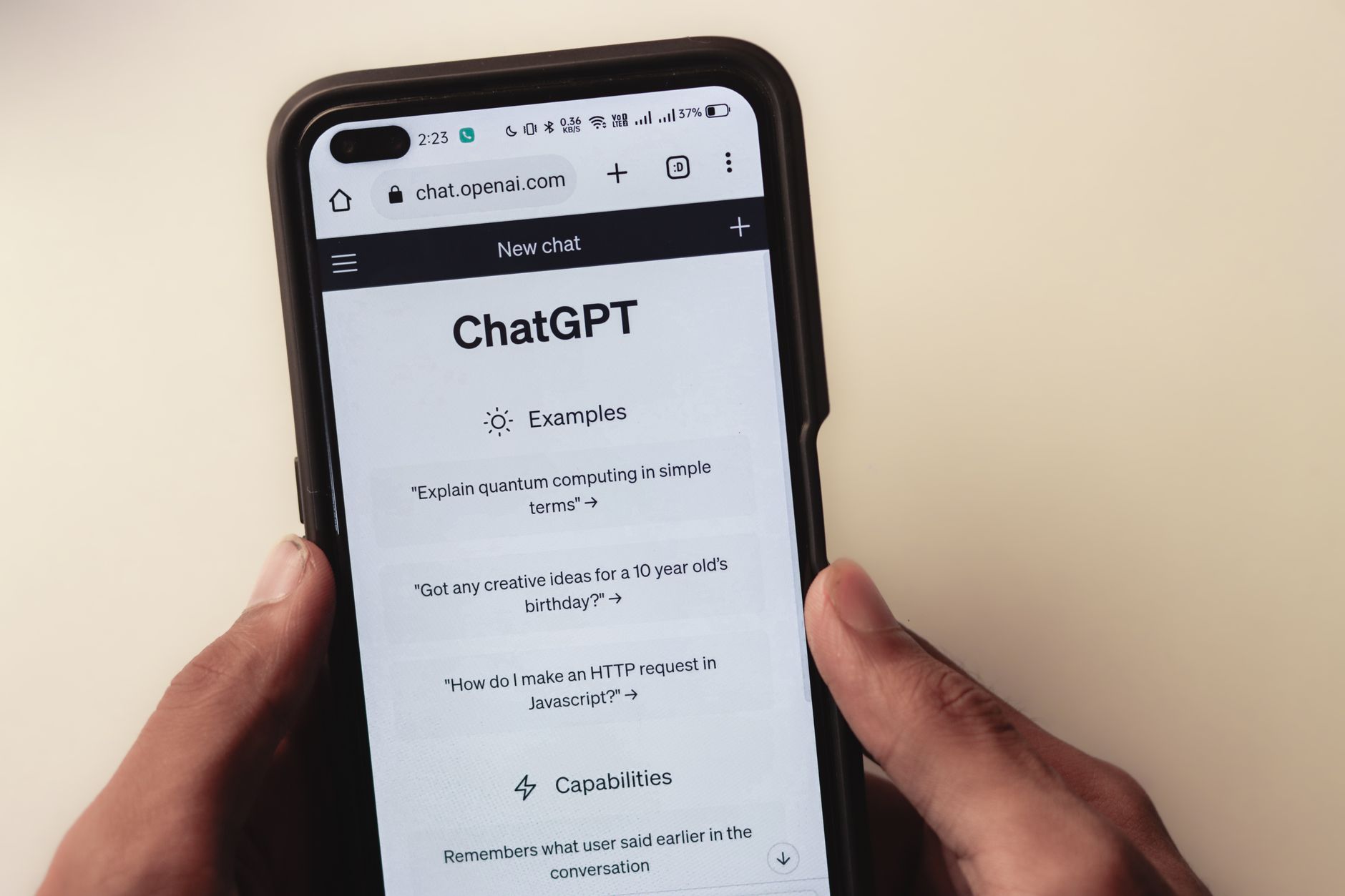
ChatGPT remains the benchmark for SEO prompt flexibility in 2026. The $20/month Plus plan gives you GPT-4o with a 128K context window, which is enough for a 5,000-word competitor article plus your content brief in a single prompt. The free tier uses GPT-4o mini with a much smaller context window and message caps, so it works for testing but not for producing full posts. In our tests, ChatGPT followed structured prompts more precisely than any other tool, especially when we specified heading hierarchy, internal link anchors, and E-E-A-T signals. You can start with the beginner prompt framework in our guide to AI blog writing prompts.
Where ChatGPT shines is iteration. You can ask it to rewrite a section in a more conversational tone, expand a paragraph with statistics, or add a comparison table. It rarely refuses and usually produces three usable variations. The downside is that ChatGPT has no built-in SEO scoring. You need to pair it with a tool like Surfer or Frase if you want on-page optimization. We have a full ChatGPT review that goes deeper into custom GPTs and workflow automation.
A specific prompt that worked well for us: “Act as a senior SEO content strategist. Here is the target keyword: [keyword]. Here is the top-ranking article: [paste text]. Write a 2,000-word guide that is more specific, more current, and better structured than that article. Use at least 10 subheadings, answer the question in the first 50 words, and suggest 5 internal links from this list: [list].” ChatGPT Plus delivered a draft that needed about 30 minutes of editing, which is excellent for a raw output.
Key strengths:
- ✅ Strong prompt adherence with detailed structured briefs
- ✅ 128K context window on the $20/month Plus plan
- ✅ Fast iteration and rewriting without extra tools
- ✅ Custom GPTs let you save SEO prompt templates
- ✅ Web browsing with Plus for current SERP data
- ❌ No built-in on-page SEO scoring or content grading
- ❌ Free tier context and message limits are too small for full drafts
- ❌ Output can be generic if the prompt lacks specific examples
Who it’s for: Solo bloggers and SEO writers who want an affordable generalist AI for prompt testing and manual optimization.
2. Claude , Long-form blog drafts and structured outlines
Claude Pro costs $20 per month and gives you a 200K context window, which is the sweet spot for long-form SEO posts. You can paste an entire competitor article, a 30-page research PDF, and your content brief into one prompt, and Claude will produce a 3,000 to 5,000-word draft that holds together from intro to conclusion. In our tests, Claude beat ChatGPT on coherence for posts over 2,500 words. The tone also felt more natural, with fewer robotic transitions. You can read our Claude review or the ChatGPT vs Claude blog writing comparison for more detail.
Claude’s biggest weakness is research integration. The free and Pro tiers do not have live web browsing unless you manually attach sources. That means you need to collect competitor articles and stats yourself before prompting. The upside is that Claude’s 200K context window can absorb all that material without losing context, which ChatGPT sometimes does at 128K. Another downside is that Claude can be overly cautious with certain SEO topics, especially YMYL niches like health or finance. It occasionally refuses to make strong claims or requires more disclaimers than necessary.
A proven prompt for Claude: “You are an SEO editor. Here is a detailed brief: [paste brief]. Here are 3 competitor articles: [paste articles]. Write a complete blog post that covers every question in the brief, uses short paragraphs under 20 words, and includes a comparison table. Do not use passive voice. End with a FAQ section answering these 5 questions: [list].” Claude returned a draft that required almost no structural edits, though we had to manually insert statistics in a few spots.
Key strengths:
- ✅ 200K context window handles multiple competitor articles at once
- ✅ Long-form drafts maintain structure better than any competitor
- ✅ Natural tone with fewer robotic transitions
- ✅ Excellent at following detailed outline formats
- ✅ Strong performance on product comparison and listicle posts
- ❌ No live web browsing in the standard plan
- ❌ Can be overly cautious with YMYL topics like health and finance
- ❌ Free tier message limits are very restrictive for testing
Who it’s for: Writers who need to paste entire research documents and get a complete long-form draft without losing the thread.
3. Gemini , Research-heavy posts with huge context
Gemini Advanced costs $20 per month through Google One AI Premium and includes a 1 million token context window with Gemini 1.5 Pro. That number is unreal for SEO research. You can paste 50 SERP results, a 2-hour YouTube transcript, and a 100-page PDF into one prompt. Gemini will extract entities, identify content gaps, and draft a post that covers the topic from angles most competitors miss. The free tier is also more generous than ChatGPT or Claude, with a 32K context window and limited access to Gemini 1.5 Flash. See our Gemini review for setup details.
Google Search grounding is Gemini’s secret weapon. When you enable it, Gemini can pull current search results and cite them directly. That reduces the manual research time significantly. However, the prompt interface is less refined than ChatGPT or Claude. You need to be very explicit about heading structure, target keyword placement, and internal link anchors. The output can also be verbose, defaulting to longer paragraphs and more adjectives than necessary. We recommend pairing Gemini with a tight prompt template and a heavy edit pass.
A prompt that worked for us: “You are an SEO analyst. Here is a list of 20 competing URLs for [keyword]. For each URL, summarize the main entities, questions answered, and content gaps. Then write a comprehensive 3,000-word guide that fills those gaps, uses H2s for each question, and includes a table comparing the top 5 competitors. Ground the output in current search results.” Gemini produced a well-researched draft, but we had to trim about 20% of the text to remove redundancy.
Key strengths:
- ✅ 1M token context window handles massive research inputs
- ✅ Google Search grounding pulls current SERP data directly
- ✅ Free tier is more generous than ChatGPT or Claude
- ✅ Strong at extracting entities and content gaps from multiple sources
- ✅ Integrates with Google Docs and Gmail for workflow continuity
- ❌ Prompt interface requires more explicit instructions than ChatGPT
- ❌ Output can be verbose and needs a heavy edit pass
- ❌ Fewer third-party SEO tool integrations than Jasper
Who it’s for: Content teams that need to process competitive SERP data, long transcripts, or huge research files in a single prompt.
4. Jasper , Built-in SEO workflows and brand voice
Jasper takes a different approach. Instead of a raw prompt box, it offers a guided SEO workflow with templates, brand voice settings, and real-time SEO scoring. The Creator plan starts at $39 per month, which is nearly double the price of ChatGPT Plus or Claude Pro. But for marketing teams, that extra cost buys a lot of time. Jasper includes an SEO mode that pulls data from Surfer and gives you a target word count, keyword density suggestions, and a content score as you write. Read our Jasper AI review for the full breakdown.
Jasper uses multiple underlying models, including GPT-4 and Claude, but it adds a layer of proprietary fine-tuning. That means the output can feel less flexible than raw ChatGPT prompts, but it is also more consistent. Jasper’s brand voice feature remembers your tone, sentence length preferences, and banned words across every document. That is a huge advantage for agencies managing 10+ client blogs. We also compared Jasper vs ChatGPT for SEO content and found Jasper produced a higher ready-to-publish rate when the brief included a target content score.
The downside is price and lock-in. Jasper’s starter plan is limited to one brand voice and a single user seat. To add team members or more brand voices, you jump to the Teams plan at $99 per month. That is hard to justify for a solo blogger. Also, Jasper’s templates can feel restrictive. If you want to write a highly custom post with unusual formatting, ChatGPT or Claude gives you more control. But for standard SEO blog posts that need to hit a specific on-page score, Jasper is the fastest path from brief to publish.
Key strengths:
- ✅ Built-in SEO mode with real-time scoring and Surfer integration
- ✅ Brand voice feature keeps tone consistent across many posts
- ✅ Templates for product reviews, listicles, and how-to guides
- ✅ Team collaboration features out of the box
- ✅ Produces a higher ready-to-publish rate for standard SEO posts
- ❌ Starts at $39/month, more than double raw AI model pricing
- ❌ Less flexible than ChatGPT for custom formatting or unusual prompts
- ❌ Starter plan limits brand voice and user seats, pushing you to $99/month
Who it’s for: Marketing teams and agencies that want an all-in-one SEO content platform without manual prompt engineering.
Frequently Asked Questions
Which AI tool is best for SEO blog prompts in 2026?
ChatGPT is the best starting point for most SEO writers because it balances price, prompt flexibility, and output quality. Claude is stronger for long drafts, Gemini for research-heavy posts, and Jasper for teams that want built-in SEO scoring.
How much does ChatGPT cost for SEO blog writing?
ChatGPT Plus costs $20 per month and gives you access to GPT-4o with a 128K context window. The free tier uses GPT-4o mini with limited messages and a much smaller context window, so it works for quick tests but not full blog drafts.
Can I use free AI tools for SEO blog posts?
Yes, but free tiers have limits. Claude’s free tier gives you a few messages per day with a smaller context window. Gemini’s free tier is more generous with a 32K context window. Jasper does not offer a free plan, only a 7-day trial.
Does Jasper produce better SEO content than ChatGPT?
Jasper includes SEO mode with real-time scoring and Surfer integration, so it often produces content that ranks faster out of the box. ChatGPT can match that quality if you write detailed prompts and use an external SEO tool, but it requires more manual work.
What is the biggest advantage of Claude for SEO blog posts?
Claude’s 200K context window lets you paste an entire competitor article, a 50-page research PDF, and a content brief into one prompt. It then produces a structured long-form draft that rarely loses the thread halfway through.
Which AI tool has the largest context window for SEO research?
Gemini Advanced supports a 1 million token context window with Gemini 1.5 Pro. That is enough to process dozens of SERP results, long transcripts, and entire ebooks in a single prompt, making it ideal for research-heavy blog posts.
What Should You Remember?
- ChatGPT Plus is the best all-around choice at $20/month with a 128K context window and strong prompt adherence.
- Claude Pro wins for long-form blog drafts because its 200K context window handles entire research docs without losing structure.
- Gemini Advanced offers a 1M token context window and Google Search grounding, perfect for research-heavy SEO posts.
- Jasper starts at $39/month and includes built-in SEO scoring, brand voice, and Surfer integration, but costs more than raw AI models.
- Free tiers work for testing prompts, but all have message limits and smaller context windows that choke full blog drafts.
- Prompt quality matters more than the tool. Even ChatGPT can beat Jasper if you use a detailed SEO brief and iterate twice.
This article is for general information only. AI tool capabilities, pricing, and features change frequently , always verify current details on the vendor’s own site. Some links may be affiliate links that support this site at no cost to you.